 |
Welcome to Shire Psychology & Counselling - walking with you on your journey |
|

 |
HomeOur PeopleOur ClientsDocuments, Links, ResourcesLibraryContact UsSite Map |  |
| Relationships |
| Loss, Lonliness & Grief |
| Our Elders |
| Disabilities & Carers |
| Women, Men, Teens & Kids |
| Fun Art & Play |
| Remote and Rural |
Veronica is a provider of services for 'Helping Children with Autism' (click here for more information on this initiative) and the 'Better Start for Children with a Disability' (click here for more information on this initiative) funded by the Department of Social Services (January 2014)
Art & Play Therapy
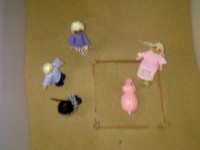
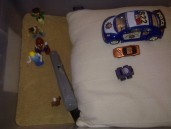
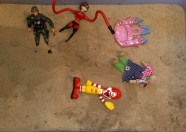
Play has been recognized as important since the time of Plato (429-347 BC) who observed, "you can discover more about a person in an hour of play than in a year of conversation." The first documented case describing the therapeutic use of play occurred in 1909 when Sigmund Freud published his work with "Little Hans," a five-year-old child suffering from a simple phobia. Freud saw him once briefly and recommended that his father take note of Hans' play to provide insights that might assist the child. The case of "Little Hans" was the first case in which a child's difficulty was related to emotional factors Veronica is a provider of services for 'Helping Children with Autism' (click here for more information on this initiative) and the 'Better Start for Children with a Disability' (click here for more information on this initiative) funded by the Department of Social Services (January 2014) Directive & Non- Directive Art and Play Therapy.There are two ways of working with children when using Art and Play Therapy- With non-directive the child, in the presence of the threapist, directs the art and play mediums. The therapist reflects the ‘play’ back to the child so that the child develops insight into their play (suitable for a child to 12 years) The child is permitted to lead the way and has the opportunity to explore and express a wide range of feelings in a safe environment within the play room. In this environment they will come to understand themselves and their feelings better; master new skills; assimilate new experiences into their view of the world, while at the same time learn new coping and problem solving skills. Examples of children's work in a Non- Directive approach. The children are given free range to select the objects wanted and to apply their meaning to the symbols as they recreate and talk about their inner world
The use of a variety of toys It is beneficial to provide a variety of toys for the child to play with so that they can ‘play out’ multiple situations, for eg to facilitate family and school issues. A variety of toys can provoke a wide range of emotional responses so that the child can learn of their emotions; can come to understand them, and learn how to deal with them appropriately
Other things that you might see being used by the child in Directive and Non-Directive Art and Play Therapy
( Reference: Rise Van Fleet (Executive Producer). (1997, 2006).
Child-centered play therapy: A DVD Workshop (Part 1 & 2) [DVDs]. Boiling Springs: Play Therapy Press. ) Van Fleet, R The Art and Play Therapy Room for children 5yrs to 12 yrs Examples of how art and symbols are used in therapy
Art applications in therapy can be used with both children and adults. Clients may be asked to draw what they are feeling, and use the shape of a gingerbread to display it on. In this way they are able to 'put it outside of themselves' which often makes it easier to talk about. From here it is possible to have a discussion on 'how they would prefer to feel' and then to consider ways in which this can happen. Art and play therapy can also be used with adults and can be useful for accessing confused or traumatic feelings Clients may also be asked to choose a symbol that is most like them; like the issue concerning them at this time; like their relationship etc. This allows them to consider the description of the symbol; its likeness to what they are currently experiencing; and permits discussion on issues such as safety; growth & change.
To Confident Kids Homepge Contact Details Contact Veronica on: 0409 032 820 E-mail Veronica@ShirePsych.com.
. |

This website was built by Ewisoft eCommerce Website Builder.